


Sports injuries
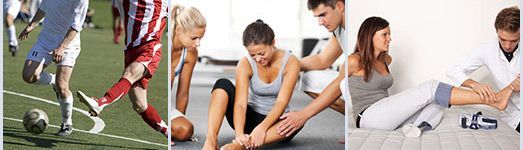
The most common causes of sports injuries include:
- Lack of or insufficient warm-up
- Poor physical condition
- Exceeding one's own limits
- Lack of breaks both between training sessions and during training
- Incorrect execution of movement sequences
- Lack of protective equipment, e.g., not wearing pads while inline skating.
- Incorrect or worn-out footwear, for example when jogging, often does not provide the foot with the necessary support.
- To bend, to slip
- Fault of another party (for example, a foul in football)
therapy
A muscle strain occurs when a sudden, jerky movement overstretches the muscle fibers. Typical symptoms include a sudden, shooting pain and an immediate restriction of movement. Even tensing the affected muscle can cause discomfort in the case of a muscle strain. Increased muscle tension, which can also be accompanied by muscle cramps, is usually present. Unlike many other sports injuries, swelling is usually mild, and bruising is not extensive. Thigh strains and calf strains are particularly common types of muscle strains.
Overview of symptoms of a sprain:
- Pain during exertion
- Restriction of mobility
- Discomfort when tensing the muscles
- Increased muscle tension
Important: If initial symptoms are ignored and sufficient rest is not provided, there is a risk of a muscle fiber tear.
bruise
A contusion occurs when the subcutaneous fat tissue and muscles are compressed. Blood leaks from the injured vessels into the tissue. Typical signs of a contusion include pain, bruising, and swelling. Mobility is significantly restricted by the symptoms. A contusion can affect muscles, joints, or bones. Common sports contusions include knee contusions, shoulder contusions, and ankle contusions.
Overview of symptoms of a bruise:
- Pains
- bruise
- swelling
sprain
Sprains occur due to a sudden and forceful overstretching of ligaments and tendons. For example, if a hand or foot is sprained, this is usually noticeable through swelling, bruising, and tenderness to the touch. Full range of motion is also often impaired.
Overview of sprain symptoms:
- swelling
- bruise
- Pressure pain
- Limited mobility
Diagnosis of sports injuries
If you want to be on the safe side with a sports injury, I recommend having a medical examination as soon as possible. As an orthopedic surgeon, I can often assess whether it's a bruise or a sprain, for example, based on the symptoms – and initiate the appropriate treatment immediately.
Bruise, sprain, or strain?
To determine the exact cause of your symptoms, a comprehensive medical history is crucial. Therefore, it is important that you describe to me as precisely as possible how the injury occurred and what symptoms you are currently experiencing. Following this, I will conduct a thorough clinical examination. With the help of targeted functional tests and the evaluation of your information, it is usually possible to quickly determine what type of sports injury you have – and what treatment is appropriate.
Imaging procedures to confirm the diagnosis
To confirm a suspected diagnosis, we can use various imaging procedures on site:
- Ultrasonic
- Magnetic resonance imaging (MRI)
Treatment of sports injuries
Act quickly in case of sports injuries – How to best support the healing process
Reacting quickly and effectively to a sports injury can positively influence the healing process. Besides rest and cooling the affected area, relieving pain and inflammation plays a crucial role. But what is particularly important in the case of bruises, strains, or sprains?
First aid for sports injuries: The RICE rule
What to do in case of a sprain? How should you react to a bruise? In acute cases, the RICE principle applies to almost every sports injury – a proven guideline that every athlete should know:
P – Rest: Stop all physical activity immediately. If you notice an injury, do not continue under any circumstances, but rest and immobilize the affected body part. E – Ice: Cool the injured area with ice (cryotherapy) to relieve pain and reduce swelling. Cryotherapy uses temperatures below 0 degrees Celsius (32 degrees Fahrenheit) and is suitable for joint and spinal problems, as well as bruises, sprains, and bursitis. C – Compression: A firm bandage can help limit swelling and prevent the bleeding from spreading. Cooling pain relief gels, such as Doc Pain Relief Gel or Enelbin Paste, can also be helpful – the latter is always applied cold. H – Elevation: Elevate the injured body part. This reduces blood flow and facilitates the removal of tissue fluid, effectively reducing swelling.
Online appointment
- Schedule now
Im Zollhafen 6, 50678 Köln, Deutschland
