

Physiotherapy
In our in-house physiotherapy practice, we offer a comprehensive range of diagnostic and therapeutic procedures. The services offered by our private orthopedic practice include, among others:
physiotherapy
Electromyographic analysis (EMG)
Isokinetic
Power Plate
Electrotherapy
Laser therapy
Kinesio-Taping
Kryo-Therapie
Manual Therapy
Ganganalyse
Ganganalyse
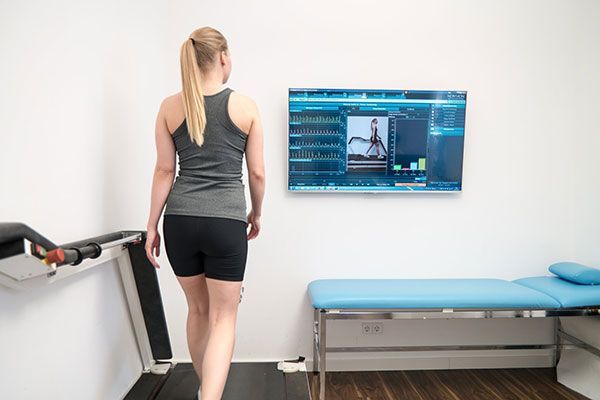
A key component of every gait analysis is a comprehensive physiotherapy examination. Using state-of-the-art camera and pressure measurement technology, potential injury mechanisms and individual risk factors in gait and running behavior can be precisely identified. The goal of the analysis is to optimize your running form, identify risk factors early on, and thereby effectively prevent injuries.
The insights gained can be used both for the precise production of orthotic insoles and for targeted training management. Furthermore, we are happy to advise you on the selection of suitable running shoes – tailored to your personal needs and analysis results.
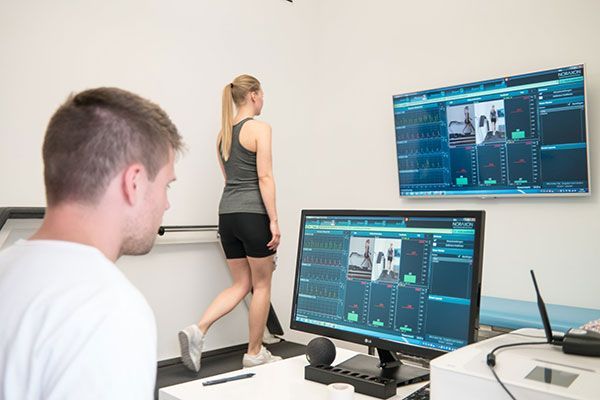
Typical indicators for a running analysis are:
- Pain in the area of the feet, knees and lumbar spine
- General running advice for training control
- Running shoe advice
- Regeneration and monitoring of progress after meniscus damage and cruciate ligament tears
- Injury prevention
- Deposit control
Electromyographic analysis (EMG)
Muscular imbalances can be the cause of a variety of orthopedic problems – including herniated discs, osteoarthritis, or calcific tendinitis of the shoulder.
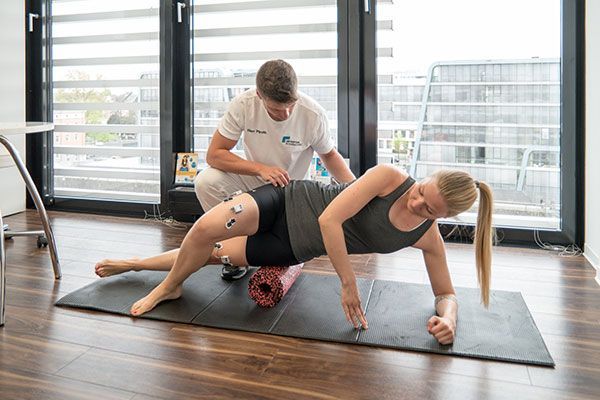
Electromyography (EMG) is an effective method for analyzing muscle activity. It allows for a "direct view" into the muscles and serves to visualize muscular weaknesses and asymmetrical activity patterns. At the same time, EMG offers valuable training support via biofeedback: Affected muscle groups can be specifically activated and reprogrammed – an important step towards achieving balanced muscle function.
The visual feedback of your muscle activity makes it easier for you to implement exercise programs individually, symmetrically and within your personal limits.
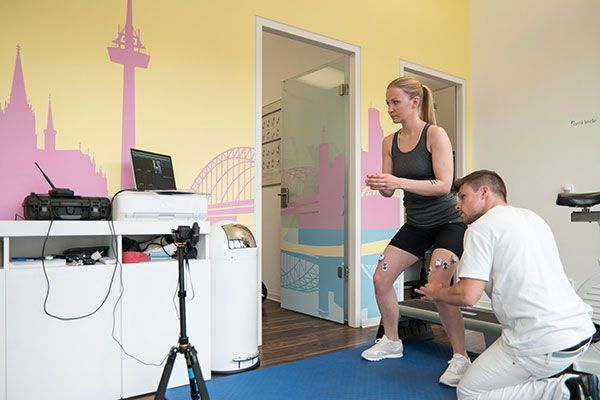
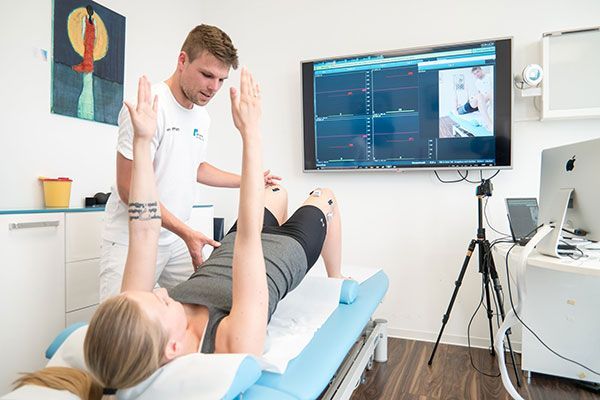
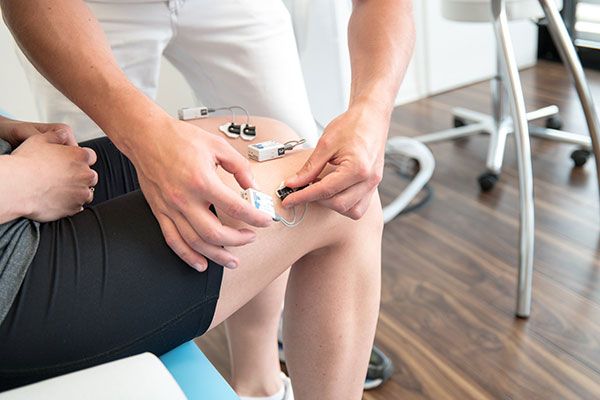
Indicators for an EMG analysis:
- Osteoarthritis
- Training control
- Calciform shoulder (Calciform tendinitis)
- Injury prevention and "return to sport" tests
- Imbalances
- "find the right muscle"
Isokinetic
The CYBEX (HUMAC NORM) is a highly advanced training and diagnostic device used in medical training therapy. It enables a special form of dynamic strength training – so-called isokinetic training (from the Greek isos = equal, kinesis = movement).
In this exercise, the joint moves at a constant, predetermined speed while the trainee exerts maximum resistance. This training method minimizes shear forces within the joint, resulting in a particularly joint-friendly yet highly effective muscle workout – across the entire range of motion and in all planes of movement.
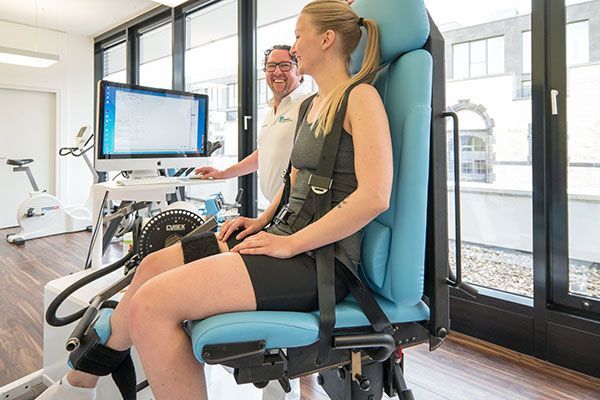
Indications for isokinetics:
- Rehabilitation after meniscus and cruciate ligament injuries
- Osteoarthritis
- Herniated discs
- Nonspecific back pain
- Athrophien
Power Plate
The Power Plate is a training device with a high-frequency vibrating platform. This transmits targeted vibrations at frequencies of 30, 35, 40 or 50 Hertz to the body – optionally for 30, 45 or 60 seconds per exercise session.
The mechanical vibrations reflexively activate the muscles, making the training particularly effective – both in terms of strength, stability and coordination, as well as promoting blood circulation and regeneration.
The vibrations generated by the Power Plate trigger reflex-like muscle contractions. In this way, even deep-lying, stabilizing muscle groups are specifically activated – without overloading joints or ligaments.
Thanks to this gentle yet intensive form of training, the Power Plate is ideal for building muscle, stabilizing and rehabilitating it.
During each session, you will be accompanied by a qualified therapist who will conduct an individually tailored training program with you – adapted to your goals, your physical requirements and your current training status.
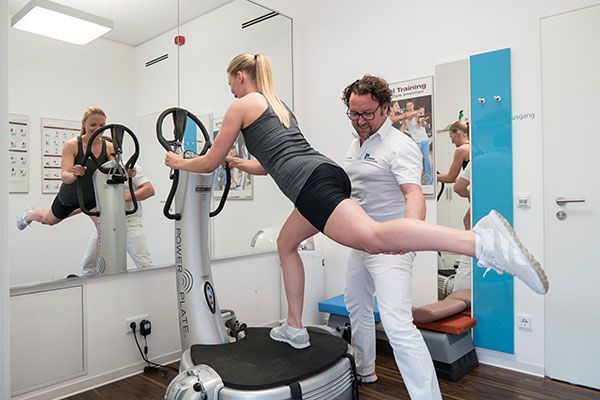
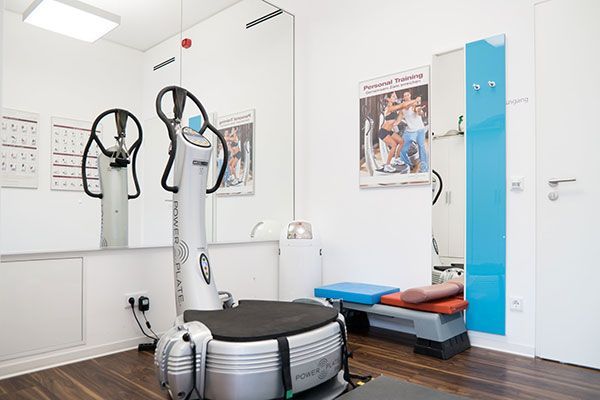
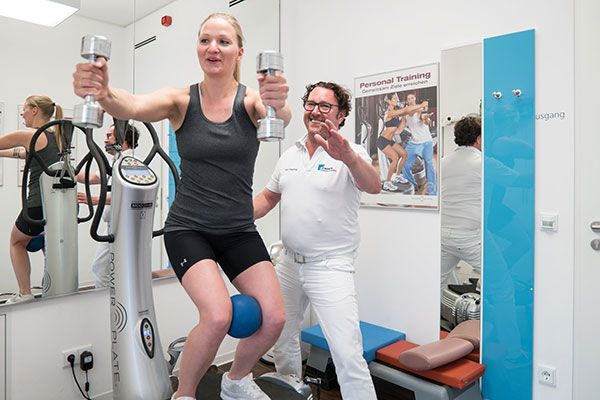
Indications for Power Plate:
- Rehabilitation after shoulder, knee, and hip problems
- Rehabilitation after herniated discs
- Improvement of instabilities
- General strength training
Electrotherapy
Electrotherapy is a proven method in medicine and physical therapy. It involves the targeted application of electric current to tissue using special electrotherapy devices to achieve therapeutic effects.
Depending on the type of current, frequency and intensity, electric current can have different effects – for example:
- Pain relief,
- Promotes blood circulation,
- Muscle stimulation or
- Anti-inflammatory.
Electrotherapy is frequently used for acute and chronic musculoskeletal disorders and effectively complements many physiotherapy measures.
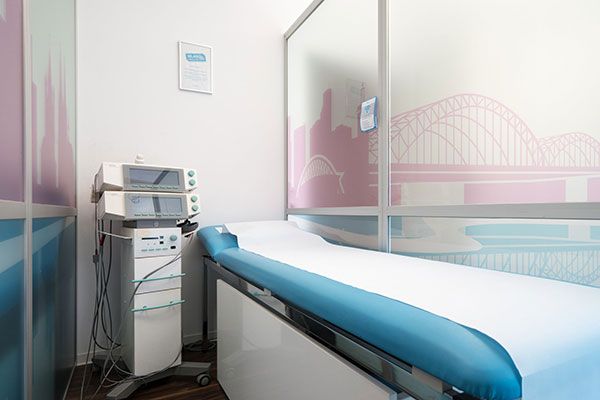
Indications for electrotherapy:
- Back pain (e.g., lumbar/cervical spine syndrome)
- Osteoarthritis (e.g., knee, hip, finger joints)
- Neuralgien (z. B. Trigeminusneuralgie)
- Irritation of tendons and ligaments (tendinitis, epicondylitis)
Laser therapy
We work with the state-of-the-art Opton laser from Zimmer – a powerful therapeutic laser for the targeted treatment of pain and tissue irritation.
The device allows for variable adjustment of the energy density and is therefore also suitable for use in deeper tissue layers. It utilizes two wavelengths with different biological effects, which are emitted simultaneously.
- 980 nm: Has a pain-relieving effect by influencing pain receptors and reducing inflammation.
- 810 nm: Promotes cell regeneration and microcirculation, thus actively supporting the healing process in tissue.
The combined application of these two wavelengths ensures an intensive yet gentle therapy – with a variable power output of 3 to 7 watts, individually adapted to the treatment goals and the findings.
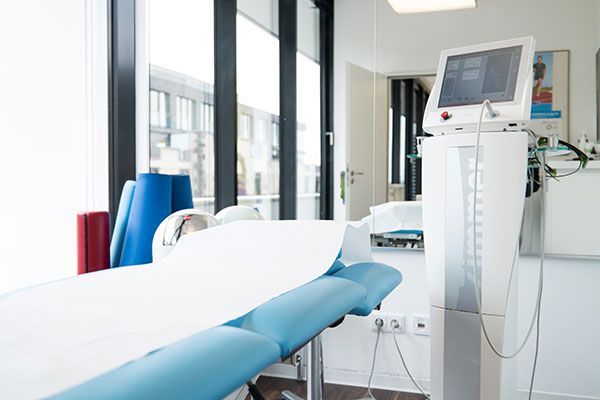
Indications for laser therapy:
- Acute and chronic pain of the musculoskeletal system (e.g., back, joints, muscles)
- Inflammatory diseases such as tendon and bursitis (e.g., tennis elbow, Achilles tendon)
- Injuries and overuse syndromes, e.g., strains, heel spurs, muscle fiber tears
- Osteoarthritis and degenerative joint diseases
- Support for wound healing and scar treatment
Kinesio-Taping
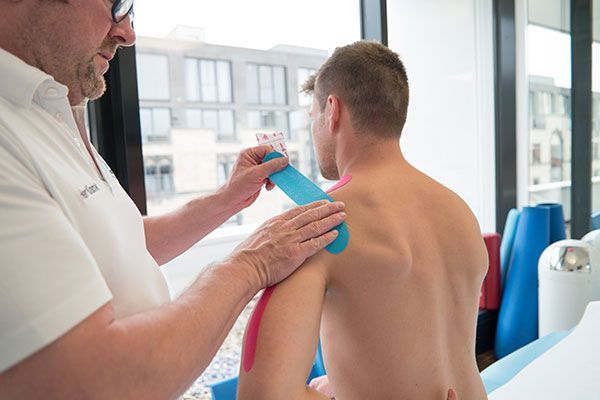
Kinesio taping (kinesiology taping) is a therapeutic method in which elastic tapes are applied to the skin.
This technique serves to achieve the following in a gentle and non-invasive way:
- to correct misalignments
- to promote physiological movement patterns and
- To relieve pain.
The special tension of the elastic tapes on skin and tissue creates a pressure and stretching stimulus that:
- stimulates lymphatic activity,
- promotes the removal of fluid
- and thus contributes to edema reduction.
Indications for Kinesio tape:
- Muscle tension and pain
- Joint instabilities
- Tendon and ligament injuries
- Swelling and lymphatic congestion
- Posture and movement disorders
Cryotherapy
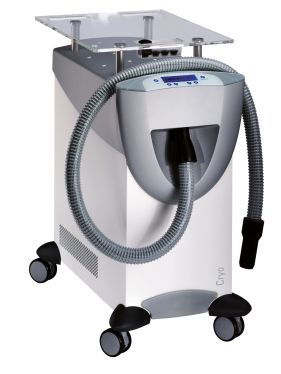
Cryotherapy refers to the targeted use of cold to achieve therapeutic effects such as pain relief, inhibition of inflammation, and stimulation of metabolic processes.
In our practice, we work with temperatures as low as -30 °C, which achieves a deep effect in the tissue and a long-lasting therapeutic effect.
Indications for cryotherapy:
- Acute and chronic pain
- Inflammation (e.g., joints, tendons, bursae)
- Sports injuries (e.g. bruises, strains, sprains)
- Swelling and edema
- Rheumatic diseases (in the inflammation-free phase)
Physiotherapy/Physical Therapy
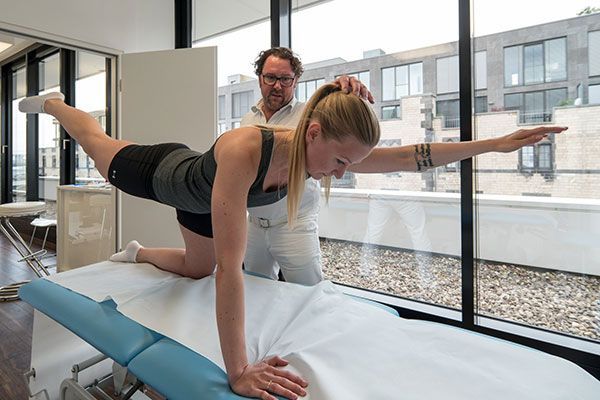
Physiotherapy (formerly known as physical therapy) is a medical therapy that works through targeted movement, manual techniques and external stimuli such as pressure, stretching, heat or cold.
The aim is to maintain or restore the body's mobility and functionality – for example, after injuries, operations, or in cases of chronic conditions.
Targeted strengthening and mobilization exercises will help you improve your mobility and return to active and pain-free participation in everyday life as quickly as possible.
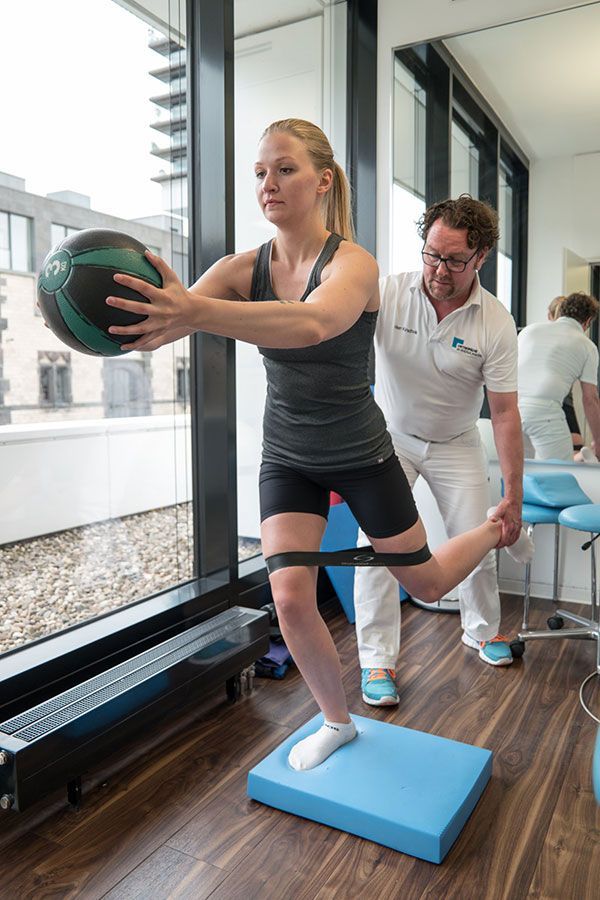
Indications for physiotherapy/physical therapy:
- Orthopedic problems (e.g., back pain, osteoarthritis, postural problems)
- After injuries or surgeries (e.g. joint replacement, cruciate ligament tear, bone fractures)
- Neurological diseases (e.g., stroke, multiple sclerosis, Parkinson's disease)
- Sports injuries and overuse syndromes
Manual Therapy
Guiding principles
"Every complaint has its own story. Only when we understand the connections can we develop a therapy that truly helps."
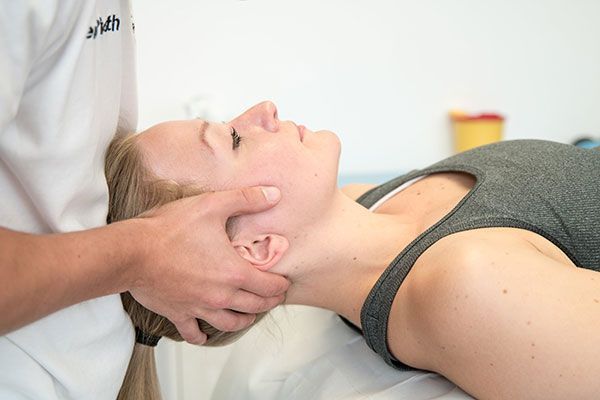
Manual therapy is a specialized form of manual medicine and focuses on the treatment of reversible functional disorders of the musculoskeletal system – especially in joints, muscles and nerve structures.
It requires extensive specialist knowledge, many years of practical experience, and at least three years of certified further training.
The goal is to restore mobility, alleviate pain, and specifically improve the body's physiological function.
Many functional disorders of the musculoskeletal system are associated with reduced metabolic activity in the affected structures. The aim of manual therapy is to precisely diagnose the cause of this dysfunction and to positively influence the local metabolic processes and thus the impaired function through targeted pressure, stretching, and traction techniques – or alternatively, through mobilization and manipulation techniques.
The basis for successful treatment is a thorough, holistic examination, in which the manual therapist gains a comprehensive understanding of your symptoms.
An important component of our therapeutic concept is the close interdisciplinary collaboration between medical and physiotherapeutic diagnostics – integrated directly into our practice.
Manual therapy is used for functional disorders and complaints of the spine, peripheral joints, and the central and peripheral nervous system.
Possible indications for manual therapy include:
- Spinal problems (e.g. blockages, pain, restricted movement)
- Joint dysfunction in the arms and legs
- Muscle tension and restricted movement
- Nerve irritation (e.g., sciatica, carpal tunnel syndrome)
- Headache
Online appointment
- Schedule now
Im Zollhafen 6, 50678 Köln, Deutschland
