


Muscle function diagnostics
Muscle disorders cannot be visualized using imaging techniques such as X-rays or MRI scans, so an alternative examination method must be used to measure muscular changes. In muscle function diagnostics, also known as surface EMG, electrodes are attached to the skin to record the electrical potentials of the muscles (e.g., shoulder and neck tension, back pain, etc.).
First, the resting muscle tone is measured, then the tone at maximum tension. Imbalances or tension become apparent, as does the performance of the muscles when comparing sides (e.g., right and left thigh muscles).
If particular discomfort arises during repetitive movements – such as when lifting heavy objects (roofers and similar occupational groups are more frequently affected by this) – a corresponding measurement of the muscle groups can be valuable for subsequent treatment measures such as physiotherapy or massages.
By performing the muscle function test, the doctor obtains important information about untrained or tense muscle regions.
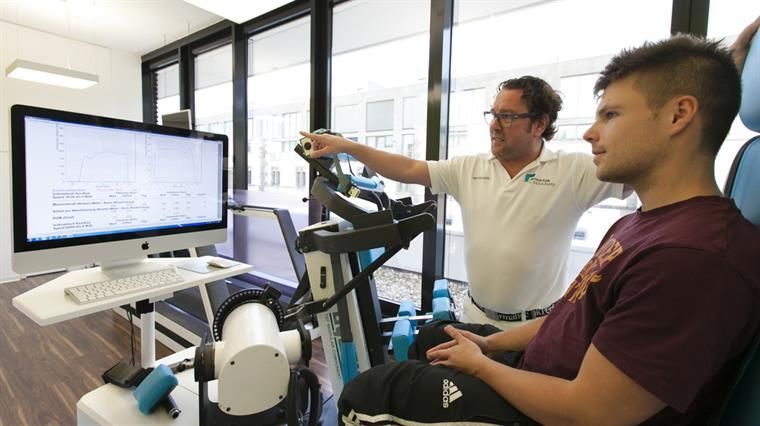
The CYBEX isokinetic training system offers the possibility of directly measuring muscle strength. This also allows training progress to be monitored and tracked.
Online appointment
- Schedule now
Im Zollhafen 6, 50678 Köln, Deutschland
