


Conservative therapy for meniscus tears and meniscus damage

Is that possible? Wouldn't surgery be necessary?
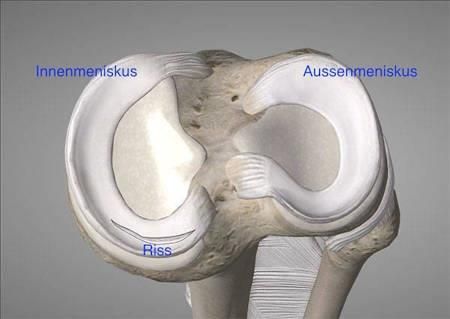
Meniscus tear
In most cases, surgical treatment of a meniscus tear is primarily performed to reduce pain. However, if alternative pain management is possible, surgery is not immediately necessary.
During the surgery (arthroscopy), part of the meniscus is usually removed, leading to the permanent loss of this important joint structure. This often promotes the development of osteoarthritis later on.
For this reason, an attempt should first be made to preserve or repair the meniscus (e.g., meniscus repair). Should this measure prove unsuccessful, surgery can still be performed at a later date.
Since 2011, over 990 patients with meniscus tears have benefited from conservative treatment, which has proven to be an effective alternative to surgery in our practice.
Our experience with this treatment so far has been consistently positive. However, scientific monitoring is still pending, and we cannot yet make a definitive statement regarding its long-term effects.
We first published these results at the 1st International Symposium for Molecular Medicine, June 10th and 11th, 2016, Düsseldorf. The full presentation can be downloaded here.
How did the treatment proceed in 2011?
When a patient with knee pain was diagnosed with a meniscus tear via MRI, we always left the decision regarding further treatment to the informed choice of the patient. The majority of those who opted for the alternative, non-surgical treatment subsequently received a series of four injections into the affected knee joint – each one week apart. The injections themselves are generally well-tolerated and virtually painless, as the injection site is numbed with a local anesthetic beforehand. In some cases, the series of injections was repeated based on individual assessment. During the treatment phase, patients were able to largely resume their normal daily activities – only sporting activities should be temporarily avoided.
Treatment results:
The majority of our patients were pain-free after treatment and could resume normal knee activity without any problems. No significant side effects or complications occurred. In almost all cases, follow-up MRI scans were performed before and after therapy for comprehensive documentation. Only four patients did not experience lasting pain relief, ultimately requiring surgical intervention. Individual results are available for download here.
Can an alternative therapy heal a torn meniscus?
What exactly is this alternative therapy?
- In this alternative therapy, certain substances are obtained from the patient's own blood.
Of the various natural components in the serum, two substances are particularly relevant for its therapeutic effect: firstly, an interleukin-1 alpha antagonist, which has an anti-inflammatory effect, and secondly, a growth factor that supports regenerative processes. By inhibiting the inflammatory response that arises as a result of the damaged meniscus in the knee, significant pain relief is usually achieved. At the same time, the growth factors contained in the serum promote the healing of the meniscus tear.
This treatment utilizes a mechanism that our bodies have always known. When we injure ourselves – for example, with a cut – the body reacts with bleeding, and certain blood cells release healing substances. The therapy uses precisely these same natural substances to reduce inflammation and promote healing in the knee.
Further development of this conservative therapy for meniscus tears
Watch video using a new method
Options for conservative therapy for a meniscus tear
A torn meniscus can restrict knee joint mobility and cause severe pain. While it often occurs as a typical sports injury in younger people, it is usually due to wear and tear as people age. Surgery is frequently recommended; however, under certain circumstances—especially if the cause is degenerative—conservative therapy for a torn meniscus can restore knee joint mobility.
What is the meniscus, and what is its function?
The meniscus is a component of the knee joint, acting as a shock absorber and gliding surface between the femur and tibia. Each knee contains two menisci – one on the inner side and one on the outer side. Both are made of strong fibrocartilage and are crescent-shaped. In a healthy state, they are precisely fitted to the shape of the articular surfaces of the femur and tibia. Thanks to their position, shape, and size, the menisci perform several functions in the knee joint. When you stand up, your weight is transferred to the knee via your thighs. This force transmission is further increased when walking, running, and jumping. The meniscus acts as a buffer, preventing the bones of the knee joint from rubbing against each other and causing damage. It also distributes the load of your weight evenly across the knee joint. A meniscus tear impairs these important functions – and thus the health of the joint. Conservative therapy for a meniscus tear aims to restore the knee's mobility and stability using non-invasive methods.
What symptoms occur with a meniscus tear?
A meniscus tear typically manifests as more or less severe pain in the knee joint. It is often accompanied by a feeling of locking or pinching in the knee, and/or significant swelling of the joint, indicating inflammation. It is also frequently accompanied by a feeling of weakness in the leg; the knee may buckle or give way.
Cause: In a meniscus tear, detached tissue and the resulting swelling in the knee can prevent the thigh muscles from adequately supporting the knee joint's movement. The pain often occurs above the affected meniscus, particularly during exertion, bending, or twisting of the knee – for example, when getting in or out of a car. Climbing or descending stairs can also be especially painful and cause the swelling to increase.
How is a torn meniscus diagnosed?
At our orthopedic clinic in Rheinauhafen, you will first be asked about your symptoms and the circumstances of your injury. The physical examination and subsequent diagnostic procedures can help rule out various injuries as the cause of the pain. A high-resolution magnetic resonance imaging (MRI) scan allows us to precisely identify the type and location of the tear and determine whether surgical or conservative treatment is recommended for the meniscus tear.
Traumatic tears and degenerative meniscus tears:
There are two main types of meniscus tears: traumatic and degenerative tears.
Traumatic meniscus tears typically result from a sudden, forceful twisting of the knee. They are particularly common in sports such as soccer, handball, or tennis—activities that require rapid changes of direction and twisting movements of the body. However, such tears can also occur in other situations where the knee is twisted awkwardly. Less frequently, repeated kneeling or abruptly standing up from a squatting position while lifting heavy loads can also cause a tear.
Degenerative (or atraumatic) meniscal tears are usually caused by age-related or overuse-related wear and tear of the meniscal tissue. The meniscus structure gradually deteriorates. Certain movements—such as the aforementioned twisting motions—can accelerate or worsen an existing tear. Degenerative tears differ significantly from traumatic tears: they develop gradually and often without a specific accident. Therefore, precise diagnosis is particularly important. In many cases of wear-related meniscal damage, conservative therapy (e.g., targeted training, physiotherapy, and rest) is more appropriate than surgery.
What happens if you leave a torn meniscus untreated?
Untreated meniscus tears can worsen over time. As the damage progresses, the risk of developing degenerative knee osteoarthritis increases. Early diagnosis and targeted treatment can counteract this progression.
How is a torn meniscus treated non-invasively?
Conservative and surgical treatment for a meniscus tear:
Conservative treatment for a meniscus tear initially aims to relieve pain and maintain or restore knee joint mobility. At the start of treatment, the knee joint is usually immobilized. To reduce swelling, it is recommended to elevate the leg and regularly apply ice to the knee. Anti-inflammatory painkillers can also provide additional relief.
Once the acute pain has subsided and mobility has improved, the active rehabilitation phase begins. Here, the focus is primarily on targeted muscle building – usually as part of physiotherapy treatment.
Degenerative meniscal tears often do not lead to mechanical problems such as locking, as they frequently do not produce loose meniscal fragments. In such cases, conservative therapy may be sufficient in the long term.
The situation is different with displaced fragments – that is, when a part of the meniscus has completely or partially detached from the surrounding tissue and shifted. This can occur with both degenerative and traumatic tears. Such fragments can become trapped in the joint space and cause mechanical symptoms such as locking or snapping in the knee. In these cases, surgical treatment is often necessary – either by partially removing the damaged meniscus (partial meniscectomy) or by repair (suture).
Which therapy is ultimately used depends on various factors – in particular whether the tear was caused by trauma or degeneration, whether fragments are displaced, and what symptoms are present.
As long as a meniscus fragment is not yet dislocated, there is a good chance of successful conservative treatment. Since the meniscus consists of cartilage tissue, it can, under certain conditions, heal itself – especially if the healing process is specifically supported.
We have developed a minimally invasive, non-surgical treatment method that addresses this issue directly: The tear in the meniscus is first stabilized using fibrin glue. Then, targeted growth factors are introduced to promote the natural regeneration of the tissue and enable the meniscus to heal.
The treatment is performed under local anesthesia, guided by MRI, and lasts approximately six weeks. Surgery is not required. The knee joint can bear weight immediately after the refixation – immobilization is unnecessary. Patients can resume their daily activities with virtually no restrictions.
Since 2016, over 990 procedures have been successfully performed using this method. In addition to meniscus tears, we have also been able to effectively treat other tendon injuries, including:
- Shoulder: Supraspinatus tendon, subscapularis tendon, labral tears
- Foot: Achilles tendon, plantar fascia
- Elbow: Lateral ligament tears
- Wrist: Scapholunate ligament
- Finger: Extensor tendon ruptures
This method offers an effective, virtually painless alternative to surgery – without the risks of general anesthesia or surgical intervention. It allows for a rapid return to everyday life and significantly improves the quality of life for patients.
Online appointment
- Schedule now
Im Zollhafen 6, 50678 Köln, Deutschland
